
Tower Hamlets is not one borough; it’s several very different environments stitched together. Canary Wharf’s glass towers, the Victorian terraces around Bow, the converted warehouses in Wapping, the dense food economy around Brick Lane, the estates and HMOs of Bethnal Green. Each of these creates a different pest problem, and treating them all the same way is why so many DIY fixes and one-size-fits-all treatments fail.
We’re Hamlets Pest Control. Ahmed Kamil has been running pest control services across East London for over 11 years, and in that time the pattern has become clear: where you are in Tower Hamlets tells you almost as much about your pest risk as what pest you’ve actually got. This guide breaks down what we see, street by street, and what actually works.
Why Tower Hamlets Has Such a Mixed Pest Picture
Three things drive pest activity across the borough:
- The waterline. The Thames, Regent’s Canal, and Limehouse Cut give rats a continuous, sheltered route through Wapping, Shadwell, and down into Limehouse and Poplar. Waterside properties see rodent pressure that inland streets simply don’t.
- Building age and type. Victorian terraces in Bow and Old Ford have suspended floors, party walls, and cavity gaps that mice and ants move through easily. Post-war estates and modern high-rises around Canary Wharf have different weak points: refuse chutes, riser cupboards, and shared plant rooms.
- Density and turnover. Whitechapel and Bethnal Green have some of the highest concentrations of food premises and shared or rented accommodation in London. High tenant turnover means bed bugs and cockroaches move between units before anyone reports a problem.
Pest Problems by Tower Hamlets Neighbourhood
Wapping & Shadwell (E1W) — Rats Along the Riverfront
Converted wharf buildings and riverside developments in E1W back directly onto rat territory. The river gives rodents a permanent, undisturbed corridor, and old wharf foundations often have voids that are difficult to seal completely. We see rats entering through communal bin stores, gaps around service pipework, and ground-floor gardens backing onto the river path.
What we do differently here: proofing focuses on the building envelope first, not just baiting. Baiting alone in a riverside property is a losing battle if the entry points aren’t sealed.
Bow & Old Ford (E3) — Ants and Mice in Period Housing
The Victorian and Edwardian terraces around Bow have suspended timber floors and old brickwork with plenty of movement gaps. This is where we see the highest concentration of ant call-outs in the borough, particularly in kitchens backing onto gardens, along with mice entering through gaps around old pipework and airbricks.
What we do differently here: treatment for garden ant colonies has to target the nest, not just the trail. Spraying visible ants without finding the colony means they’ll be back within days.
Whitechapel & Brick Lane (E1) — Cockroaches and Rats Around Food Premises
The density of restaurants, cafés, and food retail around Whitechapel and Brick Lane creates constant pest pressure. Cockroaches thrive around commercial kitchens, and rats are drawn by waste storage, especially where multiple food businesses share bin areas.
What we do differently here: commercial clients in this postcode need documented, compliant treatment plans they can show environmental health, not just a one-off spray. We build ongoing monitoring into the plan for food premises.
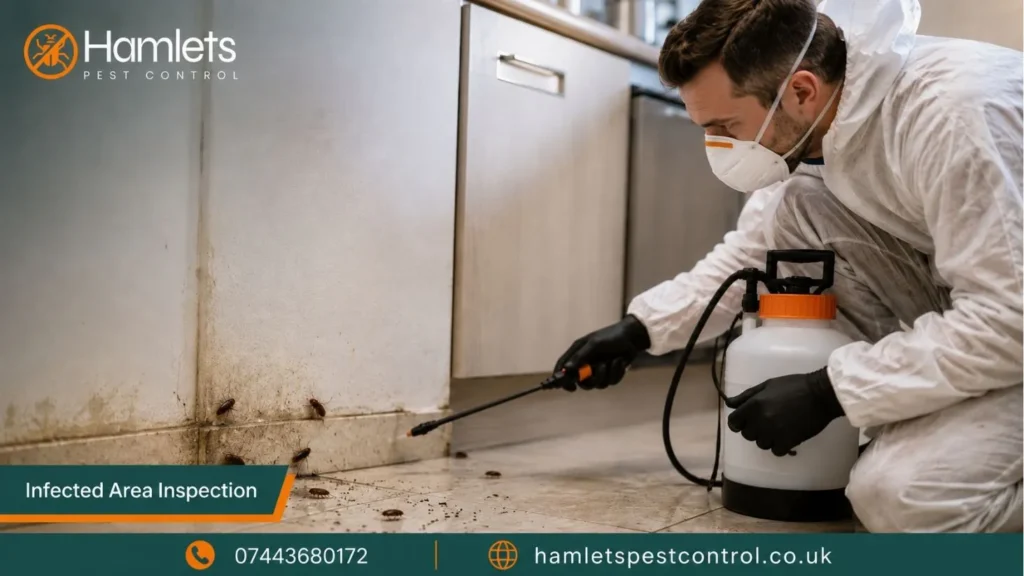
→ Cockroaches · Commercial Pest Control
Bethnal Green & Globe Town (E2) — Bed Bugs in Shared and Rented Housing
High tenant turnover in HMOs and shared flats around Bethnal Green makes this one of our most common bed bug postcodes. Bed bugs travel in luggage, secondhand furniture, and between adjoining units through wall voids and shared corridors, which is why one flat’s infestation often becomes a whole building’s problem within weeks.
What we do differently here: we treat communal risk areas alongside individual flats where landlords or managing agents are involved, because treating one unit in isolation rarely solves a building-wide bed bug problem.
→ Bed Bugs Control · Common Signs of a Bed Bug Infestation
Canary Wharf & Poplar (E14) — Pigeons and Commercial Pest Management
The high-rise commercial towers and residential developments around Canary Wharf bring a different set of problems: pigeons nesting on ledges and balconies, and occasional rodent activity around refuse chutes and basement plant rooms in larger buildings. Office and hospitality tenants here also need discreet, scheduled pest management that doesn’t disrupt business hours.
What we do differently here: proofing and deterrent work for pigeons, combined with scheduled commercial visits that fit around building management timetables.
→ Birds Proofing · Hotel Pest Control
Seasonal Pest Calendar for Tower Hamlets
Pest activity in the borough follows a fairly predictable pattern, and knowing what’s coming means you can act before an infestation takes hold:
- Spring (March–May): Ant activity picks up in Bow and Old Ford as colonies become active. Early wasp queens start scouting nest sites in lofts and sheds.
- Summer (June–August): Wasp nests become established and visible. Flying ants swarm after warm, humid days. Bed bug reports rise with increased travel and house moves around the borough’s rental turnover.
- Autumn (September–November): Rats and mice move indoors as temperatures drop, particularly along the waterline in Wapping and Shadwell. This is typically our busiest rodent season.
- Winter (December–February): Rodent activity continues indoors. Cockroach activity in commercial kitchens stays constant year-round, driven by heating rather than outdoor temperature.
DIY vs Professional Pest Control: When to Call Us In
Shop-bought traps and sprays can work for a single, early-stage problem. They tend to fail once a colony or infestation is established, and in shared or rented buildings, a DIY fix in one flat rarely stops the pest moving to the next.
As a general rule, it’s time to bring in a professional when:
- The same pest keeps coming back after a shop-bought treatment
- You’re seeing activity in a shared or rented building, not just your own unit
- You’re a landlord, managing agent, or business needing a documented treatment record
- The pest shouldn’t be handled without training, such as wasp or hornet nests
What to Expect From a Hamlets Pest Control Visit in Tower Hamlets
Every job starts with a full inspection of the property, not just the room where the pest was spotted. That’s how we catch entry points and nest locations that a quick treatment would miss. From there, we agree on a treatment plan suited to the pest, the building type, and whether it’s a residential or commercial property, then carry out the treatment and advise on prevention so the problem doesn’t return.
We work with homeowners, tenants, landlords, letting agents, and businesses across E1, E1W, E2, E3, and E14, with same-day appointments where possible.
Frequently Asked Questions
Do you cover all of Tower Hamlets, or just certain postcodes?
How quickly can you attend a pest problem in Tower Hamlets?
We offer same-day appointments where available across Tower Hamlets. Response times can vary by postcode and time of booking.
Do you treat shared buildings and HMOs, or just single flats?
Yes. Bed bug and rodent problems in particular often need treatment across a shared building rather than a single unit, and we work directly with landlords and managing agents to arrange this.
Are pest control treatments safe for homes with children and pets?
Yes, we use methods designed to be safe for occupied homes. We’ll always talk you through what’s being used and any precautions to take.
What’s the most common pest problem in Tower Hamlets?
It varies by area. Rats are the dominant issue near the river in Wapping and Shadwell, ants and mice are more common in the period housing around Bow, and bed bugs are most frequently reported in shared and rented accommodation around Bethnal Green.
Dealing with a pest problem in Tower Hamlets? Get a fast, professional response.
Get a Free Quote · Contact Us · Call: 07443680172
Written by Ahmed Kamil, Founder, Hamlets Pest Control
Ahmed has over 11 years of experience providing pest control services across East and Central London, working with homeowners, landlords, and businesses throughout Tower Hamlets, Hackney, and Islington.